CRAG ETHICS & ETIQUETTE
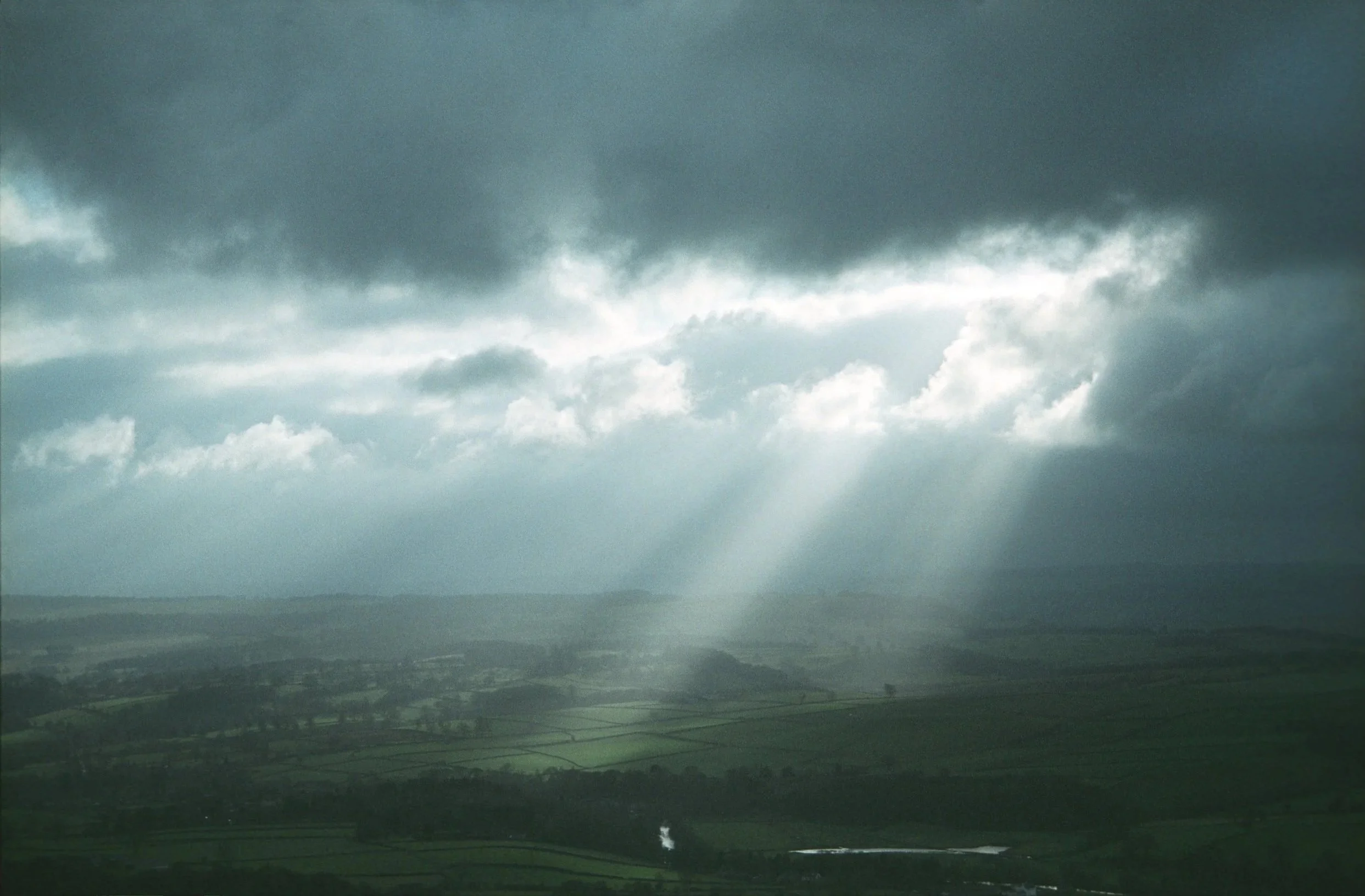
(Pictured)
Sunlight breaking through the clouds on an overcast day at Curbar in March.
If you’re heading out to the Peak District, North Yorkshire or Fontainebleau for the first time after discovering that climbing is amazing and you’d like to touch rock instead of plastic, this guide is for you! I’ve structured this guide to be in chronological order, so just follow along imagining you’re pulling up to the parking.
And if you’re a seasoned rock-toucher, there could still be something of value for you in this guide too. We’d love to hear if you agree/disagree with any of these and most importantly, if you think we’ve missed any!
We all love this beautiful sport that allows us to discover so much about ourselves and our abilities; a sport that we share with close friends and family (lots that we’ve met through climbing!).
This guide isn't meant to sound like a grumpy old man lecture, far from it! It's all about sharing helpful insights. Hopefully after reading this, you too support these efforts and can pass on the learning to your friends that may get into climbing in the future.
I've been climbing for over 10 years, with over 500 days of it spent outside. Firsthand, I've witnessed the impact of increased traffic on beloved routes over time, both here and abroad. While change is inevitable, there’s a solid and obvious list of steps we can take to mitigate and minimise the effects of the sport's growing popularity.

Lift Share - Before you even set off to the crag, think if you can lift share. If you’re heading out on a busy day with a pre-planned group and all your pads/equipment and climbers fit in one car - bingo. Beyond the obvious of a smaller carbon footprint it’ll be easier for you to find parking.
Don’t have many climbing partners within your friendship group? Most cities have mountaineering clubs and there are endless groups on social media designed for connecting climbers who want a lift, a catch or just fancy some social climbing.
(Pictured)
The author in 2017 crammed in between bouldering pads en route to Big Jim in Fontainebleau, this is what’s called responsible lift-sharing.
Parking - Aside from tips for avoiding unexpected tickets there’s a few things worth covering here that aren’t immediately obvious.
Clearing the obvious first, be mindful of how you park wherever you go, park at car parks where possible and park your car in a space-efficient way. e.g don't park sideways across three potential perpendicular spaces in a lay-by. If you arrive when it’s quiet, think ‘how can I park so this space can be fully utilised’. This will allow for other visitors to enjoy the outdoors as much as you do.
If the obvious parking is full for the crag you planned to go to, it’s in everyone’s best interest to go elsewhere, take a longer approach and bank the cardio or pick a quieter crag. Carving your own new spot half in a hedge or in front of farmers' gates is a sure fire way to anger locals and land owners. Likewise avoid parking on super wet mud or grass where you might spin your wheels and tear up the ground - yes your car’s a beast and may eat mud for breakfast but ultimately it’s more about risking access rights. We’re not the most inconspicuous bunch walking in with mattresses on our backs, so access bans are easy targets for disgruntled parties.
Aside from access rights and being a considerate soul, there’s also a point that can’t be exaggerated enough - s**t parking is deadly. Most parking areas for accessing crags are on small, rural roads with high speed limits. If you park half on a verge you’re endangering yourself and other drivers but most importantly you risk preventing the emergency services and mountain rescue accessing the fells. If have an unfortunate slip and get gifted an open fracture but there are cars on both sides of the access road, the larger vehicles that come to your rescue will be stuck. This is seen all too often on bank holidays where the masses descend, so please park considerately.
Paths vs open fell - Between climbers it’s often agreed we should all try stick to existing paths. We’re often all heading to the same crag from the parking so it makes sense? A few of our team are also into their fell running and whilst that’s any ‘line is in’ sport, everyone is taking different lines, so the impact is limited. As a group of boulder pad mules, maybe with trad rack wind chimes jingling away, enough crag snacks to feed the 5000 and half the B&Q battery fan range - we weigh a lot more, and have more of an impact.
Often stomping through a bunch of shrubbery with a ladened pack will save yourself probably no time anyway, since you'll be slower than going back a bit and rejoining a path. The majority of the shrubbery you'll be stomping through consists of ferns, which form a stifling monoculture across most gritstone hillsides. However, this dominance arises from their incredible resilience, so stomping through them may actually help these 8-foot ferns take over even more by destroying the more fragile plants beneath. But the main damage is that hillsides are disturbed which can contribute to erosion.
Litter picking - A no-brainer - take your rubbish home.
But if you do come across some, accidents happen, maybe it blew out of someones bag… it might seem initially strange, it’s not your litter… but do a great thing and stuff it in your bag! It makes the space nicer for everyone and you get that warm feeling that you are actually positively impacting our green spaces.
One rogue coke can or crisp packet can spoil a lovely view and it won't take up much room bringing it back with you.
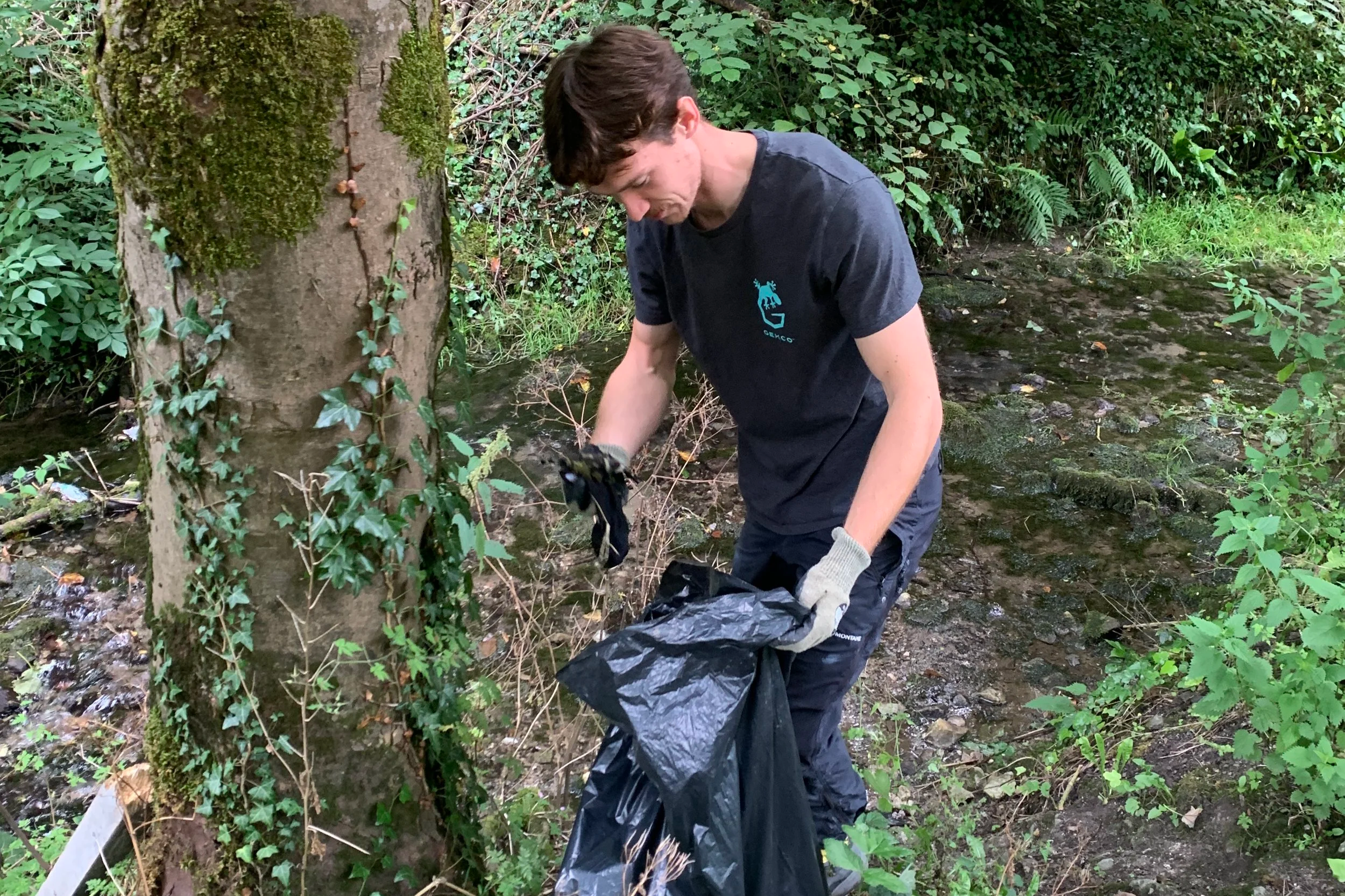
ONE NOT TO MISS! - Outside in the Peak host a Crag Clean Up BBQ every year where you get a free meal for every full bin bag of litter you pick up, this is a great event and gives you real perspective on the difference a small bit of effort can make to our shared spaces, especially when we group up and do mass litter picks.
(Pictured) The author participating in the Crag Clean Up, picking up rubbish out of the river by the Stoney Middleton car park.
It’s worthwhile having a roll of bin bags in your car so you can easily pick up litter.
At the crag - A lot of the best and most popular crags across the world are in national parks, beautifully scenic places preserved for their remote and natural feel. They're shared by all and our presence can add unwanted and unfair detraction from their draw. In other environments these actions may have no negative impact, but at the crag, it may ruin someones day.
Playing music out loud? We all have our psyche song and fortunately some clever soul invented speakers that go in your ears so no one else has to listen to your Norwegian death core playlist other than you. You get to keep it all to yourself!! On a serious note, as with many of these things, it's about balance, we personally think outdoors it's earphones, but your board at home - get the huge JBL out and shake your floor.
Make the crag your home? If you rope climb indoors you know to keep your gear to the line you’re climbing. The outdoors is no different, try keep your gear tidy and avoid spreading out too much, especially in larger groups. Keeping chat volume reasonable can also prevent a busy crag feeling overcrowded making all welcome.
Smoking at the crag? It’s back to being considerate, simply stepping away downwind from groups and taking your ends home with you means zero impact on others. After all, fresh air is a huge part of the appeal for many of us.
Crag dogs? We all know how amazing a cute crag pup is, but please make sure that any over excited dogs are kept under control. Often a piece of gear works as a great point to attach a lead to. Yes they’re friendly and yes they won’t bite but that doesn’t mean your beloved fluffball isn’t going to get absolutely bodied when someone rips off the sinker jug from the top of the bloc! Equally you may be able to ignore the open pack of biscuits on your neighbours bag, but I doubt they will when you’re preoccupied watching a sketchy belay.
The unwritten now mostly written rules of climbing, applied to outdoors
Before you climb:
If joining another climber(s) on a problem it's always good courtesy to politely ask to join them before chucking things down, and communicate with each other on the best pad placements. Sometimes pads are better to be rearranged when there's more added to the landing. You would certainly appreciate a nicer landing and a friendly person to arrive if you were the first on a climb. I’ve made some great friends from having climbed another problem with someone else that had been a stranger before then.
If you're now working a problem with another person you don't know, it's polite and friendly to offer a spot. You’d certainly appreciate a spot if you were in a risky situation or going for a dynamic launch at height!
Hold off on shouting unsolicited beta (how to do a climb) at someone, ask first if they want any. Of course if they're in a risky position, clearly struggling and it may be dangerous to fall. Then at times beta may be appreciated if they’re unaware of a nice foot/hand just out of view. Your mileage may vary, always be polite! Some people like being told how something is done, some people like figuring it out for themselves, and very often beta that helps one person may not help another person at all!
For roped climbing (sport or trad), check what nearby climbers are up to before gearing up. Keep clear of people belaying and give space to climbers, safety first, and it's courteous. If it's feeling a bit busy try another route; plenty of other climbs to get on!
As you climb:
Wipe your climbing shoes off on a mat,towel, your trouser leg or even with just your hand to make sure you're not picking up soil/mud/rocks etc and eroding holds. It's very easy to cause damage to soft sedimentary rocks like gritstone by picking up a loose particle and crushing it into a foothold.
Use chalk sparingly. (Check out our COLD for the best chalk adhesion, meaning you’ll need less chalk!). Apply the minimum amount of chalk to your hands and brush holds with a small amount of chalk if they haven't had any traffic. If it gets traffic, like some of Stanage Plantation’s most popular flashable 7s; Zippy's Traverse or Captain Hook, then you probably need to remove chalk rather than add. Brushing excess chalk off increases grip, especially on gritstone.
Chalk quality varies wildly based on its composition, some cheaper brands soak up sweat poorly and some even feel slippy when you sweat. This results in needing to re-apply chalk more often, resulting in much more chalk on the rock. Our GEKCO Loose Chalk is the highest purity magnesium carbonate on the market, this means better skin adherence and higher sweat absorption, resulting in less chalk use for the same mileage. Less goes further, keeping the rock cleaner and your hands grippier.
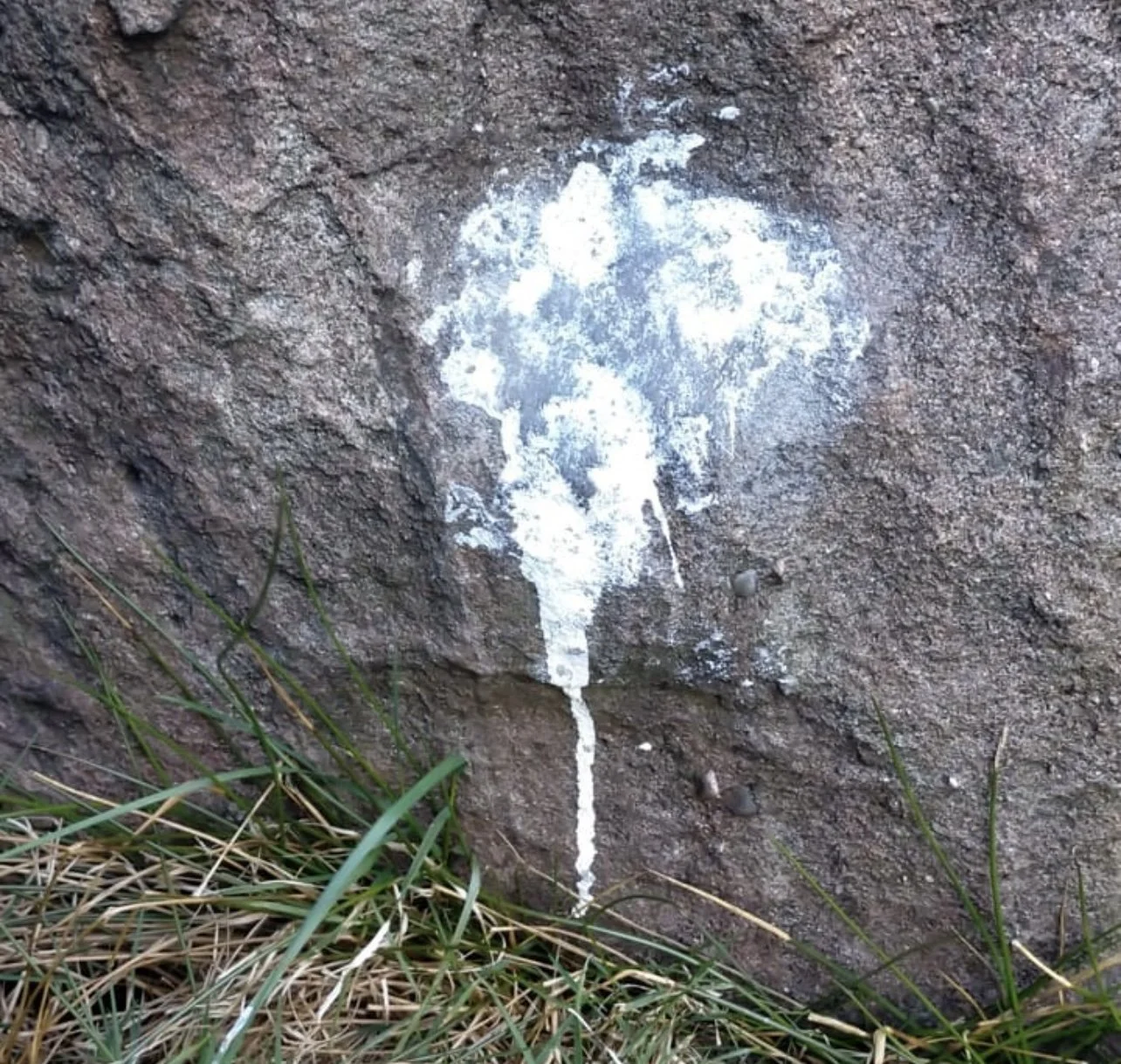
Chalking up footholds? If you really need to mark them because you can't remember where to place your limbs then place a very small point of chalk from a little pinch of chalk just above or below the foot hold. Chalk does not aid with grip for your shoes, chalk primarily removes sweat and dries your hands out when it absorbs the excess moisture in them.
Your shoes don’t sweat, so adding chalk to a foothold won’t make it grip, it’ll actually make it worse. Think dusting a countertop to prevent your dough from sticking to it!
(Pictured) Foothold at the Roaches covered with liquid chalk.
We're still seeing so much liquid chalk containing resin around climbing gyms and outside at crags across the UK, Europe and rest of the World. It's key now more than ever with the volume of climbers, that you avoid using any liquid with resin in, it's the most sure fire, fast-track way to ruin holds on real rock and, unless you use harsh acids to clean them, ruin artificial holds. We as a company exist to fix the ‘resin in liquid chalk’ problem. We created the first resin-free, thickener-free Liquid Chalk, so wherever you use our liquid chalk at least it’ll wash off, resin wouldn’t. Grab it here.
Image from Rob Hearnden
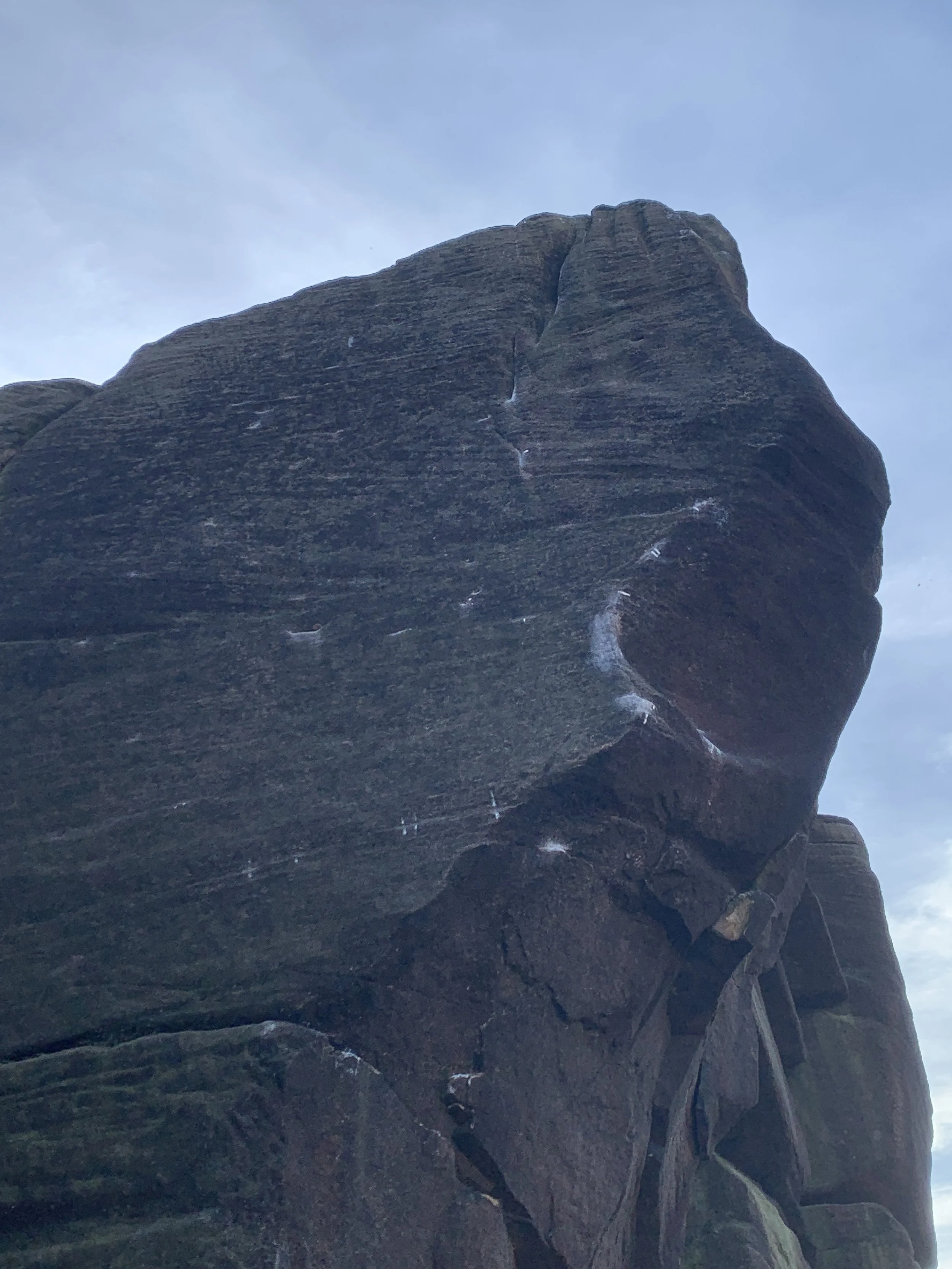
Tick marks can be necessary for some to allow them to climb something where the holds are hard to see or it’s hard to get the right points of each hold.
It’s good etiquette to remove them after climbing along with any excess chalk on the holds to help give any future climbers on it (prior to rain washing it off) a chance to experience the climb to its fullest.
The rock deserves your respect, especially if it's granted you a hard and scary send.
(Pictured) Dynamics of Change covered in tick marks.
If you find the rock wet or it starts raining:
For many of us, one of the greatest appeals of outdoor climbing is the permanence of the problems—rockfalls aside, most routes where climbers have tested their mettle remain largely unchanged from decades ago. It's a special feeling to measure yourself against the achievements of the sport's past legends. However, rocks like gritstone and sandstone can erode or break away easily when climbed wet, and a single impatient climber can ruin a route forever.
There are countless classic problems that have been irreversibly damaged by people climbing them when wet, such as Blood Falls at Rowtor and Tombstone at Froggatt is starting to see accelerated erosion on the starting feet, plus many more (maybe an article needs writing on all damaged problems out there).
These rock types often feature a hard crust (varying by quality) that weakens with rain, making it prone to erosion or breakage during use. The underlying material lives up to its name, it's essentially sand. After heavy rain over multiple days, features like flakes can become compromised, with steep roof-style problems especially vulnerable. No matter how far you've traveled or if it's your only chance to climb outdoors in a while, don't spoil it permanently for everyone else.
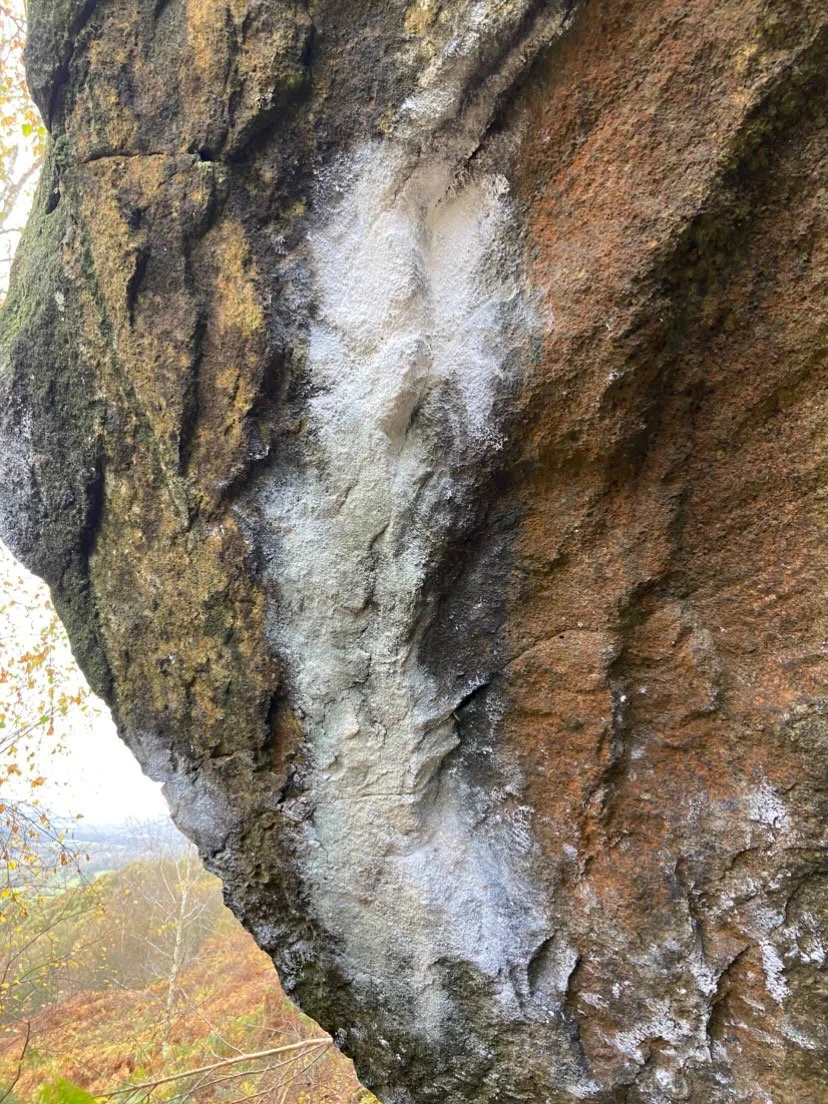
(Pictured)
Zoo York (8A) at Caley; completely caked in chalk. Caley is a crag that is often quite damp due to its north facing aspect and tree cover but the rock is rather solid, so people often ignore the fact it’s wet and climb it anyway. Caley is a crag that suffers from something many crags suffer from; a few very popular problems that see constant traffic and the rest of the crag is neglected. Problems can and have broken, crucial pebbles have fallen out or crimps have snapped off.
It can sometimes be quite tough to tell whether rock is dry or not, nice clean slabs tend to be okay to climb if it has dried superficially. If you’re not sure then press your lips to the rock, the skin on your lips is more sensitive to moisture than your hands. Yes, we said kiss the rock, go do it. If you still can’t tell, then apply a very small amount of chalk to the hold with a brush and brush it, if the chalk applies and spreads well and remains white then it’s dry. If it discolours then it’s wet and you shouldn’t climb on it.
Luckily this practice has gone out of fashion anyway but don't blowtorch wet rock to dry it out, most rock types can't withstand this kind of temperature fluctuation. Sounds insane but this is often done on granite, one of the few rocktypes that can withstand it.
If you find the crag busy:
Climb something other than probably the most popular and repeated traverse in the country; Green Traverse, jokes aside there are lots of very high quality problems across a lot of areas in the country. Especially the Peak District, on a definitely-going-to-be-busy nice weather weekend don't go to the same classic problems and crags, explore your guide book. Rockfax guides are very comprehensive with lots of pictures, just enjoy scrolling/flipping through them and visit elsewhere. Read our blog on some less discovered crags here, although Lawrencefield was certainly up and coming last late season.
If you really have to get on something that's busy then clearly observe the Great British past time of queueing and taking your turn on the climb, don't take ages on the Deliverance traverse to then fall off the dyno and then hop straight back on because you were "So close that time though". Deliverance is an absolutely beautiful piece of rock and a fantastic set of moves that when it all falls into place you truly do achieve effortless float but there are other rocks out there, of at least similar quality. You don't have to pile onto it.
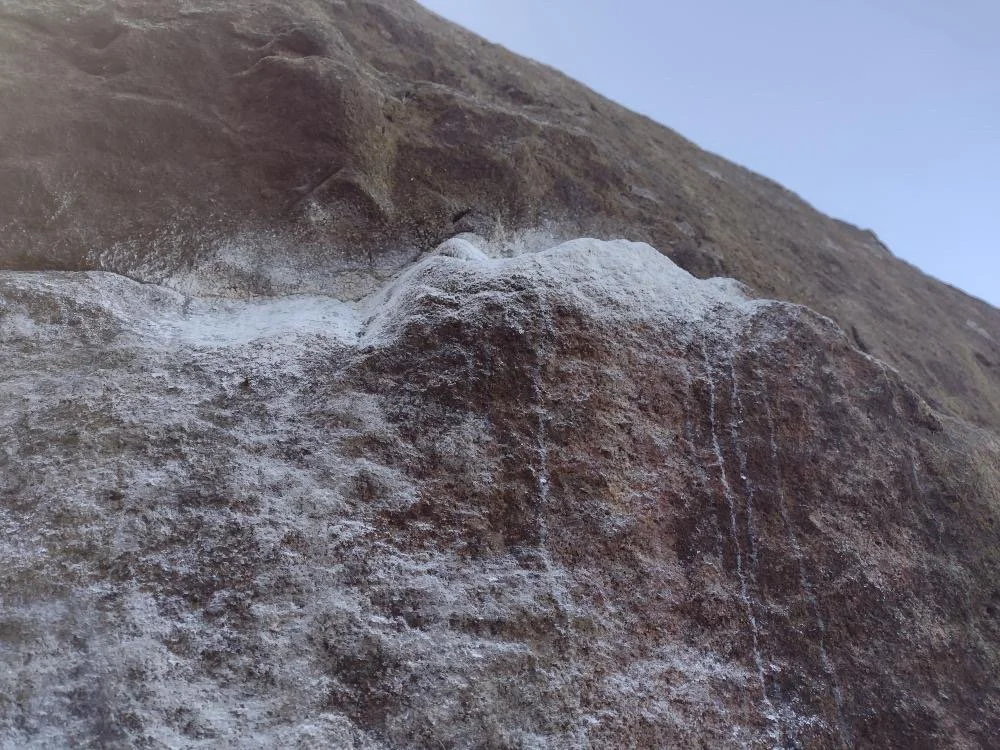
Hopefully if you’ve followed all the above then you have pretty much achieved the mantra; “Leave no trace” and even the chalk you’ve used should then wash away after a good rain.
Little Richard at Baslow not receiving the respect it deserves, the pure quantity and potentially resin content of chalk that was applied has not washed off after rain.
Image from David Boothroyd
Sadly it’s undeniably hard to fully achieve Leave No Trace due to the number of people now climbing on the same problems. The best we can do is to minimise the impact each individual climber has so that future generations can enjoy them as we do currently.
Imagine some number of years down the line you’re showing your new climbing friend or maybe even child around your favourite crag and you happily share what was one of your favourite projects from your younger days, only to find the key hold broken off or massively eroded. Quite heartbreaking knowing that they’ll never get to enjoy it in the way you did - let's keep those crux holds intact so they can experience the same joy!